The Rapture Was Invented in the 1830s. Now It's Reached the Pentagon
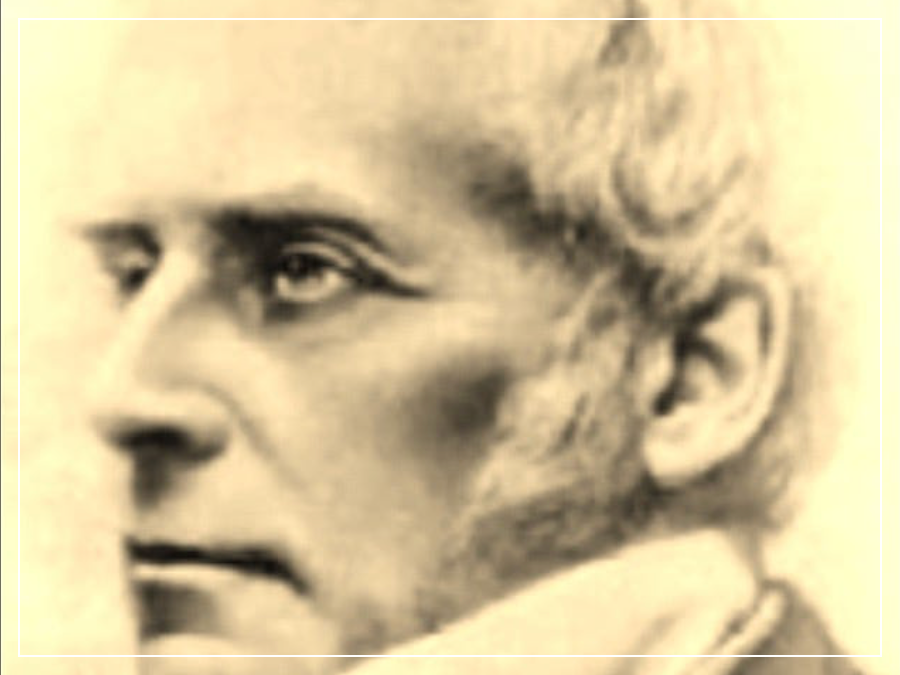
How a 19th-century preacher reshaped Christian prophecy—and why it still matters today.
The rapture theology popular in American evangelicalism today traces back to the 19th-century preacher John Nelson Darby and the system known as dispensationalism.
I grew up in the Bible Belt during the Cold War, where nuclear annihilation and the Second Coming were essentially the same conversation. Everyone expected the bombs would come, and one day soon we’d see mushroom clouds in the distance. We played numerology games to calculate which world leader was secretly 666 — the Antichrist of Revelation 13:18.
I remember a classmate telling me, brightly, that she just couldn’t wait for the Second Coming. She said it the way other kids talked about Christmas — eagerly, matter-of-factly, with genuine anticipation. I remember feeling like I’d been punched in the gut; despite the ubiquity of this sentiment, it never failed to fill me with panic. I didn’t want the world to end. I liked the Earth. I wanted to grow up and live a full life between green grass and blue sky.
But for the kids around me, the End of the World was good news. It was discussed at dinner, taught in Sunday school, whispered about with something that looked uncomfortably like hope. The Soviets had the nuclear arsenal, and they were targeted on us. Revelation had the script. All the pieces were in place. We just had to be ready for Judgement Day.
All of that feels like another lifetime. A strange country I’d left and didn’t plan to revisit. I didn’t realize anyone even thought like that anymore.
Then U.S. commanders began briefing their troops in the language of Revelation, telling soldiers that President Trump has been anointed by Jesus to trigger Armageddon and hasten the return of Christ.
Suddenly the monsters from my childhood are back, and this time they’re briefing soldiers.
After leaving my small town, and serving in the military myself, I used my G.I. Bill benefits to study theology. I spent years with exactly the texts these commanders are invoking — and the ones they’ve never heard of.
So let me tell you something that doesn’t appear in most news coverage of this moment.
Despite the certainty with which it is often preached, the prophetic system behind this language is not ancient Christianity at all. It is a nineteenth-century invention.
Allow me to introduce John Nelson Darby.
He was a Plymouth Brethren minister who, in the 1830s, developed an elaborate system for reading biblical prophecy — a system that later came to be called dispensationalism. Darby divided history into distinct eras of God’s dealings with humanity and proposed a specific sequence of end-times events: the secret rapture of believers, a period of tribulation on earth, the battle of Armageddon, the visible return of Christ, and the establishment of a millennial kingdom.
Before Darby, Christians certainly believed Christ would return, and some early writers expected the thousand-year reign described in the Book of Revelation. But the specific architecture Darby proposed — a secret rapture separating believers from the rest of the world before a tribulation and a detailed prophetic timeline for world events — does not appear as a developed theological system anywhere in earlier Christian tradition.
Not Thomas Aquinas. Not Martin Luther or John Calvin. Not the Church Fathers. The prophetic framework those Pentagon commanders are invoking — a secret rapture followed by a tribulation and a final battle of Armageddon mapped onto world events — took shape in the nineteenth century when an Irish preacher named John Nelson Darby assembled it into a coherent system.
Darby carried this system to the United States through a series of preaching tours in the late nineteenth century, where it spread through Bible conferences and revival networks before eventually being embedded in the footnotes of the hugely influential Scofield Reference Bible, which generations of readers treated as Scripture itself. Hal Lindsey’s The Late Great Planet Earth sold tens of millions of copies in the 1970s, convincing a Cold War generation — my generation — that nuclear annihilation was not a catastrophe to be prevented but a prophecy to be fulfilled. Then came the Left Behind series, which sold over 80 million copies and introduced Darby’s theology to an entirely new generation as a lived psychological experience. Today, adults describe coming home from school as children, finding the house empty, and thinking in genuine terror: the Rapture happened and I was left behind. They describe panic attacks. Nightmares. Years of anxiety. This is what a 19th century theological novelty does when it gets into children.
The word “rapture” comes from the Latin translation of a passage in 1 Thessalonians describing believers being “caught up” to meet Christ. But the idea of a separate, secret rapture event years before the final return of Christ — the centerpiece of modern dispensational prophecy — is Darby’s innovation.
There’s the crucial difference.
If this essay resonates with you, consider subscribing. I write about early Christianity, theology, and the ideas shaping modern religious culture.
Darby’s system spent most of its existence as a theological backwater — eccentric, marginal, and largely ignored by the broader Christian tradition. Then it got into the United States military, and ignoring it became a privilege we no longer have.
The earliest Christian writers did not teach a secret evacuation of believers from the earth. They taught transformation.
For thinkers such as Origen and Clement of Alexandria — theologians working only a few generations after the New Testament — salvation was not framed as an escape from the world but as the transformation of creation itself. It was about the renewal of all things — what the Greek tradition called apokatastasis, the restoration of creation to its original wholeness. The world was not a stage to be destroyed once the chosen were airlifted out. It was the object of redemption.
The trajectory of history was not toward annihilation but toward healing.
The Book of Revelation itself — the text being cited in those Pentagon briefings — was almost certainly written as a response to Roman imperial power in the first century. It uses the symbolic language of Jewish apocalyptic literature to speak hope to communities living under empire.
Most historians of early Christianity understand “Babylon” in Revelation as a coded reference to Rome. The “beast” evokes the Roman imperial system and, for some readers in antiquity, specific emperors such as Nero. The number 666 appears to function as a numerical cipher — a common practice in the ancient world — for a ruler’s name.
This is not a fringe interpretation. It is the mainstream historical reading of the text. What is controversial — what requires a specific set of modern American assumptions to sustain — is the idea that a first-century Jewish-Christian apocalypse, written for communities suffering under Roman occupation, was intended as a predictive timeline for geopolitical events in the modern Middle East.
It would be a dark irony if a misreading of a first-century apocalypse helped bring about the end of the world twenty centuries later.
The earliest Christians were not waiting eagerly for the world to end. They were waiting, actively and urgently, for the world to be made right. Those are not the same thing. They are, in fact, opposite things.
One vision produces people who work to heal the world because they believe it is worth healing. The other produces Pentagon commanders who brief their troops that the blood they are about to spill is holy, necessary, and prophetically ordained.
I argue the true Christian mission is to care for the world, not escape it.
I think about that girl from my childhood — bright-eyed, eager, genuinely excited for the end of everything. I don’t think she was malicious. I think she had been handed a framework that made annihilation meaningful, that turned her dread of nuclear war into something she could look forward to instead of mourn. In the shadow of the Cold War, with missiles pointed at us from across the world, that framework offered a strange comfort: at least it meant something. At least someone was in charge of it. At least the faithful would be spared.
I understand that now in a way I couldn’t then.
What I cannot understand — what I refuse to baptize as faith — is that same framework, two generations later, operating not as private comfort but as military doctrine. Not as a way of surviving fear but as a justification for generating it. Not whispered in Sunday school but briefed in combat readiness meetings to troops about to be deployed.
The earliest Christian theologians would not have recognized this framework. Their debates about the end of history looked very different.
The troops filing complaints — the ones saying this violates their oaths, their unit cohesion, their conscience — are, whatever their own theology, closer to the spirit of the tradition than the commanders invoking it.
The world is worth saving. That has always been the deeper claim of the faith. Not escaping it. Saving it.
That is what I learned when I went back and read what the first Christians actually wrote — before anyone had heard of John Nelson Darby, before the Scofield Bible, before Left Behind, before any of this. The world is not a stage to be cleared. It is the object of hope.
It always was.
If this essay resonated with you, consider subscribing.
I write about early Christianity, theology, and the history behind modern religious ideas — especially the ideas that quietly shape our politics and culture.