God, Dogs, and Rewriting the Resurrection

Fair warning: This doesn't end where it begins. We start out in the woods of New England. We debate faith, suffering, fear and end by rewriting Jesus' resurrection story with less sacrificial atonement, more faith, more Mary Magdalene. Just so you know.
Millie and I walk a lot. We both have dogs, and like the woods.
"I don't think I got anything or learned anything from my mother dying so young," Millie said. "I don't think it was God's will, and I don't think everything works for the best."
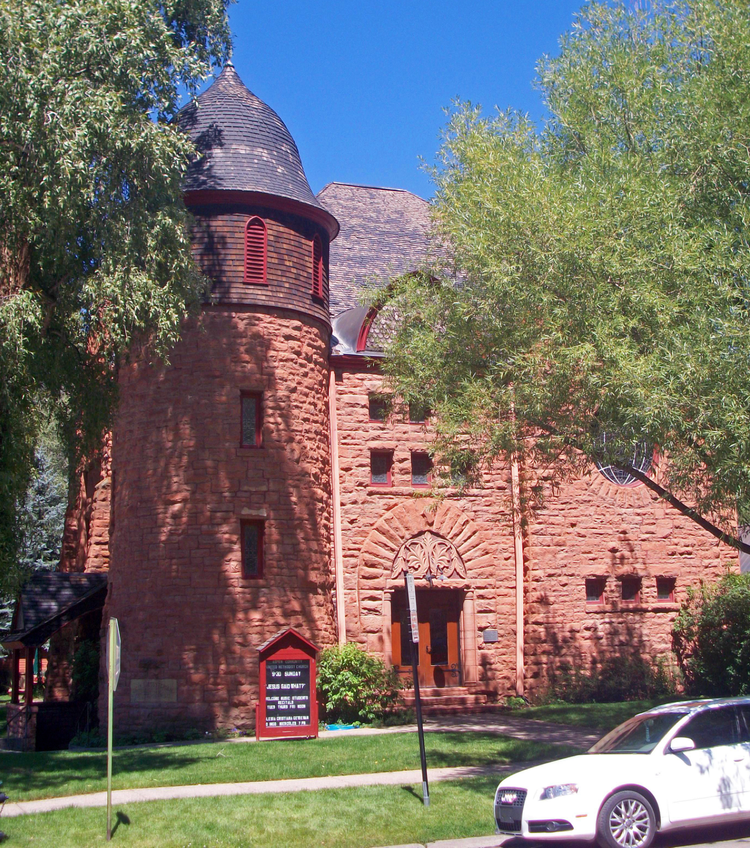
Millie and I go to the same church – a small 200-year old wooden structure built against the river by New Hampshire farmers when the hills across the dirt road were apple orchards. Land so near the river may have been cheap – too easily flooded for farming. That's often how these stories go.
"It's the old debate," I say, thinking of suffering. "God's either powerless to help us or just doesn't give a damn."
Or, God teaches and develops us through suffering.
Sorry, that's the voice of an old mentor of mine, a Catholic priest who cut his teeth working with those with substance abuse in the most downtrodden parts of Boston, before moving to the suburbs and opening a pastoral counseling center.
Jesus didn't believe in suffering, though. When he met a leper, a blind person or someone with an incurable illness, he didn't tell them to go home and quit complaining. He didn't tell them that God was using their pain, or that everything was working out the way God planned. No, he fought back. He went around healing people wherever he was.
When it came to his own suffering, he did the same. He got on his hands and knees and prayed that God would save him from being executed by the state on a trumped-up charge. "Take this cup from me," he prayed.
Here's where my own beliefs take a turn from the majority opinion. I know that most Christians are taught that God couldn't hoist Jesus out of that bad situation, because he needed him to be a sacrifice to atone for the sins of mankind. Who came up with that formula, originally? I'll have to look it up. I want to say probably Paul, with a pile-on by Augustine, but don't judge me, lol. It's late at night and I should be in bed already.
Note: I did look it up. Paul started it — Romans 3, Romans 5 — Augustine made it feel inevitable with original sin, and then Anselm of Canterbury codified the whole transaction in the 11th century. John Calvin came along during the Reformation and depicted it as punishment in a court of law (so pre-modern!), rather than Anselm's sweetly medieval debt of honor.
Anyway, what that story sounds like to me is that Jesus failed, just as many of us have in a time of crisis, to clear his mind, quench the cold sweats and dread and put himself in the right mind to accept a miracle. He lost faith, just like poor Peter, the Bible's buffoon, here in Matthew 14:25-31:
25 Shortly before dawn Jesus went out to them, walking on the lake. 26 When the disciples saw him walking on the lake, they were terrified. “It’s a ghost,” they said, and cried out in fear.
27 But Jesus immediately said to them: “Take courage! It is I. Don’t be afraid.”
28 “Lord, if it’s you,” Peter replied, “tell me to come to you on the water.”
29 “Come,” he said.
Then Peter got down out of the boat, walked on the water and came toward Jesus. 30 But when he saw the wind, he was afraid and, beginning to sink, cried out, “Lord, save me!”
31 Immediately Jesus reached out his hand and caught him. “You of little faith,” he said, “why did you doubt?”
The next line – Matthew 14:32 – has the disciples all saying, “Truly you are the Son of God," and what I imagine happened next is that Jesus slapped his forehead and said, "you guys are just never going to get it, are you?" He'd roll his eyes and remind them about the faith that moves mountains, the faith of the mustard seed, and that he promised they could do what he was doing and more if they just had enough faith. Jesus wanted to retire some day and wanted others to be able to keep on going, healing and helping, and not just run to Jesus every time they needed something.
Let's get back to Peter. He had enough faith to clamber out of the boat and take a few steps on the water. Matthew's gospel says Peter "saw the wind and became afraid," but I'm guessing he actually came to his senses. He thought, "wait a minute...this is crazy. I can't walk on water!" and down he went.
Which of us can say that our faith hasn't failed us, especially when we're looking for a miracle. When we are asking for something that defies the laws of physics, or even just probability, haven't we all failed, at some point, to keep believing in something we couldn't see just yet?
Let's remember, too, how hard keeping the faith is when shit gets real and we're scared out of our wits.
So, back in the Garden of Gethsemane. Jesus is having his own dark night of the soul. He's been the one going around performing miracles – and trying to teach others to do the same thing – but they've been kind of slow on the uptake. Now he needs someone to help him – to provide him with a miracle, but the disciples can't even stay awake with him while he prays all night for his life. In Mark 14:33-37 we can clearly see that he's terrified:
33 He took Peter, James and John along with him, and he began to be deeply distressed and troubled. 34 “My soul is overwhelmed with sorrow to the point of death,” he said to them. “Stay here and keep watch.”
35 Going a little farther, he fell to the ground and prayed that if possible the hour might pass from him. 36 “Abba,[a] Father,” he said, “everything is possible for you. Take this cup from me. Yet not what I will, but what you will.”
37 Then he returned to his disciples and found them sleeping.
Most of us know the story. He goes back and tries to get his head on straight enough to pray, but it's no use. He returns a couple more times to check on the disciples, and finds that instead of keeping watch (and presumably praying for him), they have fallen asleep each time. Finally, he gives up. In Mark 14:41, his frustration is palpable:
41 Returning the third time, he said to them, “Are you still sleeping and resting? Enough! The hour has come. Look, the Son of Man is delivered into the hands of sinners. 42 Rise! Let us go! Here comes my betrayer!”
He goes. He is executed by the Roman Empire. His death is reported in all four canonical gospels. Here's how Mark 16:1-8 describes what happened two days later:
16 When the Sabbath was over, Mary Magdalene, Mary the mother of James, and Salome bought spices so that they might go to anoint Jesus’ body. 2 Very early on the first day of the week, just after sunrise, they were on their way to the tomb 3 and they asked each other, “Who will roll the stone away from the entrance of the tomb?”
4 But when they looked up, they saw that the stone, which was very large, had been rolled away. 5 As they entered the tomb, they saw a young man dressed in a white robe sitting on the right side, and they were alarmed.
6 “Don’t be alarmed,” he said. “You are looking for Jesus the Nazarene, who was crucified. He has risen! He is not here. See the place where they laid him. 7 But go, tell his disciples and Peter, ‘He is going ahead of you into Galilee. There you will see him, just as he told you.’”
8 Trembling and bewildered, the women went out and fled from the tomb. They said nothing to anyone, because they were afraid.[a]
The earliest manuscripts we have of Mark end there. Verses 9 through 19 were added in a later generation by some unknown hand.
In Luke 24:1-10, the women who had come with Jesus from Galilee are met by two men:
24 On the first day of the week, very early in the morning, the women took the spices they had prepared and went to the tomb. 2 They found the stone rolled away from the tomb, 3 but when they entered, they did not find the body of the Lord Jesus. 4 While they were wondering about this, suddenly two men in clothes that gleamed like lightning stood beside them.(...)
9 When they came back from the tomb, they told all these things to the Eleven and to all the others. 10 It was Mary Magdalene, Joanna, Mary the mother of James, and the others with them who told this to the apostles.
Matthew 28:1-3 tells it this way:
Mary Magdalene and the other Mary went to look at the tomb.
2 There was a violent earthquake, for an angel of the Lord came down from heaven and, going to the tomb, rolled back the stone and sat on it. 3 His appearance was like lightning, and his clothes were white as snow.
The Gospel of John adds a number of people to the scene that don't appear in the other tellings. It becomes a footrace between Peter and "the other disciple, the one Jesus loved." Mary Magdalene was, in the end, the one who got to see and talk to Jesus while the others were still milling around inside the tomb, examining the funeral wraps. I'll let you check it out here.
Jesus rises, and according to the early Christian movement, appeared in person and in visions for years to come.
Now here's how I would tell the story:
Jesus, fed up with trying to both get his disciples to understand his message and despairing of being able to perform a miracle for himself, gave himself over for arrest.
At least one disciple, however, had been listening. While the others were still having breakfast the morning after the Sabbath – or even the evening before – someone who actually understood what Jesus was getting at snuck down to the tomb. They paid off the guards and someone to roll away the stone. Then, they did what Jesus had done not so long ago when Lazarus had died:
38 Jesus, once more deeply moved, came to the tomb. It was a cave with a stone laid across the entrance. 39 “Take away the stone,” he said.
“But, Lord,” said Martha, the sister of the dead man, “by this time there is a bad odor, for he has been there four days.”
40 Then Jesus said, “Did I not tell you that if you believe, you will see the glory of God?”
41 So they took away the stone. Then Jesus looked up and said, “Father, I thank you that you have heard me. 42 I knew that you always hear me, but I said this for the benefit of the people standing here, that they may believe that you sent me.”
43 When he had said this, Jesus called in a loud voice, “Lazarus, come out!” 44 The dead man came out, his hands and feet wrapped with strips of linen, and a cloth around his face.
Jesus said to them, “Take off the grave clothes and let him go.” – John 11:38-43
Was this Mary Magdalene, or perhaps the one or two young men whom she met when she went to the tomb? Because I'm the one writing this, I'll make it Mary Magdalene. She appears to have gone on to become a leader in the Jesus movement after his death. "Apostle to the Apostles," no matter how much the accounts differ in the synoptic gospels of the resurrection, it was Mary Magdalene right in the middle of it. Pushed aside and rebuffed by the men, sure, but Jesus (or a young man, young men, or two angels) gave her the message to tell to the disciples.
Or is that just the story she told, after she'd raised Jesus up, and sent him on his way to safety, far outside the borders of the Roman Empire?
That's the way I'd write it. So, I have. Jesus got the redemption he was praying for. Mary Magdalene developed the faith she needed to move mountains (and gravestones), and carried on the healing mission for a few more decades.
Amen all over that.