What Early Rivals Reveal About Christianity’s Fragmented Beginnings
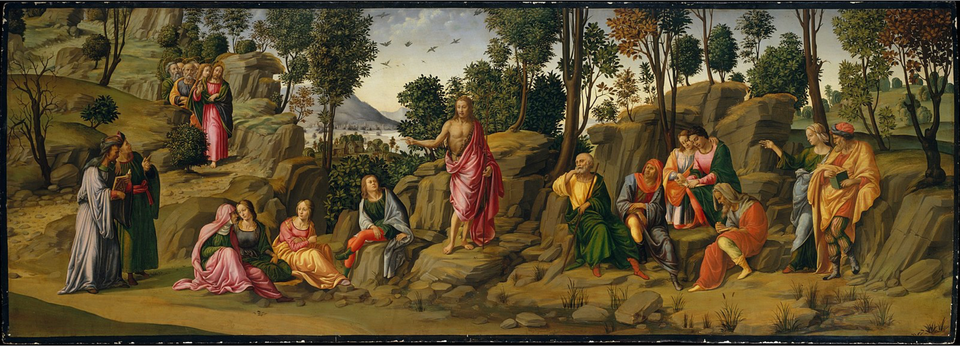
Apollos, Prisca, and John the Baptist show us how messy the early Jesus movement really was
I was poking around in the Book of Acts yesterday and tripped over a detail I’d never noticed before. In Acts 18:24–26 we meet Apollos, an eloquent Jewish teacher from Alexandria. Prisca Luke says this about him:
…A Jew named Apollos, a native of Alexandria, came to Ephesus. He was a learned man, with a thorough knowledge of the Scriptures. He had been instructed in the way of the Lord, and he spoke with great fervor and taught about Jesus accurately, though he knew only the baptism of John. He began to speak boldly in the synagogue. When Priscilla and Aquila heard him, they invited him to their home and explained to him the way of God more adequately.
Just an FYI: “The Way” is what the early Jesus followers called their movement.
So, Apollos knows “the Way of the Lord.” He teaches “the things concerning Jesus.”
But at the same time, he only knows John’s baptism. He hasn’t yet heard the rest of the story. It seems likely that he’s part of John the Baptist’s movement, in which Jesus plays a part but isn’t the boss.
Luke shows us Apollos there in the synagogue at Ephesus, teaching what learned at the feet of John.
Here’s now Prisca and Aquila step in to “explain the Way more accurately.” I don’t know how I feel about that, as I’ve had plenty of people step in to try to “explain more accurately” when think they detect a splinter in my eye. Sharing information and opinions is one thing, but there’s more than a hint of correction here, and it rings a bit false. Experience has shown me again and again that those who impose their views on others usually haven’t done enough work (interior or exterior) to understand what they’re talking about.
Yet it’s the followers of Jesus who are telling the story, and that movement eventually prevailed — so their viewpoint is what we are left with.
What fascinates me about this vignette, however, is what this tells us about the early church. It wasn’t a clean line from Jesus’ birth, death and resurrection straight to “Christianity.”
The Jesus story was one in a tangle of overlapping teachers, tragic deaths, followers, and movements.
Here’s the kicker: Jesus may not have loomed as large in that context as we imagine today.
The Many “Ways” of the First Century
“The Way” wasn’t a brand-new name Luke invented for Christians. Other Jewish sects used it too. The Dead Sea Scrolls show that the Qumran community called themselves “the Way.” Josephus, writing in the first century, tells us John the Baptist’s following.
Now many people came in crowds to him, for they were greatly moved by his words. Herod, who feared that the great influence John had over the masses might put them into his power and enable him to raise a rebellion (for they seemed ready to do anything he should advise), thought it best to put him to death. — Josephus 18.118
Soon thereafter John’s death, Herod’s army suffered an overwhelming defeat at the hands of Aretas IV of Nabatea around 36 CE. Many Jews, Josephus says, interpreted the disaster as divine punishment for Herod’s unjust execution of John the Baptist:
Now some of the Jews thought that the destruction of Herod’s army came from God as a just punishment of what Herod had done against John, who was called the Baptist. — Josephus 18:116-117
Careful observers will remember that Jesus’s own death is usually dated around 30–33 CE. John’s death came a few years later — between 36 and 37 CE —and it was his execution, not Jesus’, that Jewish tradition and Josephus remembered in connection with a national military disaster.
Clearly, the people of the time felt that God could let Jesus’ death slide, but John must be avenged.
In other words, in the popular imagination of Josephus’ time, it was John’s movement — not Jesus’ — that loomed large enough to explain why God had turned against a king.
While Josephus doesn’t explicitly say John ‘outshone’ Jesus, his writings tell us that John had vast influence and visibility. Given how few non-Christian sources mention Jesus, however, many scholars infer that John’s public prominence was far greater in his own era.
This explains why, even decades later, Paul stumbles across disciples in Ephesus who still know only John’s baptism and have never heard of the Holy Spirit (Acts 19:1–7).
So in that first-century landscape, we see at least three overlapping groups:
- John’s movement, with a ritual of baptism and a message of repentance, still flourishing after his death.
- Jesus’ followers, proclaiming resurrection and Spirit baptism.
- Other Jewish sects like Qumran, calling themselves “the Way,” focused on purity and end-time expectation.
And then there’s Apollos — standing at the crossroads, eloquent and fiery. Whose leadership would he claim? It’s very likely that he would mention several teachers he held in reverence, including John, Jesus, and others.
The story of Apollos is a stark reminder: Even after his death, Jesus was not yet the “obvious center” of the renewal movement. His message was one among many in a vibrant, fractious, heterodox Jewish awakening. Christianity as we know it came out of this messy soup, not as a foregone conclusion but as one movement that, for a host of reasons, eventually dominated.
The Braiding of Movements Then
Prisca and Aquila don’t rebuke Apollos for being wrong. They pull him aside and teach him “more accurately.” In other words, they braid him into their strand of the movement.
That braiding is crucial. Early Christianity survived not because it was neat and pure, but because it absorbed, debated, and synthesized. It grew by picking up stray strands — like Apollos, half in John’s orbit and half in Jesus’ — and weaving them together into something new.
The braiding of these two movements didn’t stop with adherents like Apollos. The New Testament stories of John the Baptist hasten to link Jesus with John, and then fall all over themselves to establish Jesus as the senior partner. This tendency gets more exaggerated as the gospels go from the earliest — Mark — through Matthew, Acts and finally the Gospel of John.
It looks to me like this: as The Way movement matured and both Jesus and John died, Jesus’ followers worked hard to make sure we’d never make the mistake of treating the two men — or their message — as equal.
Let’s keep an eye on this telling fact: Jesus was baptized by John. This means Jesus was, at some point on his path, a follower of John. We can even speculate as to whether he was still a disciple of John, or if he and his followers had formed a separatist movement, by the time of his death.
Yes, the canon gospels tell us the story as the later writers, scribes, and editors of Jesus’ clear predominance — but the fact that they have to say it so loudly and so many time makes me suspicious.
The Temptation to Simplify
We often imagine that the early church had it easy: one Lord, one faith, one baptism. In reality, it was “many movements, many baptisms, much confusion.” Only later did councils and creeds trim the wild branches into a single trunk. Those traditions, books, teachers, that were not brought into the canon were declared anathema and made to disappear.
Scholars estimate that what we now call the New Testament represents only a fraction of early Christian writing. Beyond the 27 books of the New Testament, we have about three dozen non-canonical works in manuscript (for example, the Gospel of Thomas, Didache, and Shepherd of Hermas), plus references to dozens more now lost (Gospel of the Hebrews, Paul’s missing “letter to the Laodiceans,” etc.).
Then there are the texts no one even knew existed until archaeologists stumbled on them, such as The Gospel of Mary (1896) or the Nag Hammadi library (1945). In other words, what we read today is only the visible tip of a vast, mostly vanished iceberg of early Christian literature.
This diaspora of scripture was a result of the attack and counter-attack among Christian groups in the ancient world — as spiritual “leaders” displayed a disappointingly low level of Christlike behavior.
Likewise, in our own day, some are eager to divide and anathematize, drawing clean lines between the “true” church vs. the “false,” the faithful vs. the fallen. Everyone have different criteria for this discernment, depending on our their own values and understanding.
I think what we’re seeing — the chaos, the splintering, the zeal of some groups and the disillusionment of others — is actually what it has always looked like when new movements are being born. Let us pray that whatever is born from this difficult labor, it resembles Christian nationalism not at all.
Learning from Apollos
Apollos’ story in Acts ends on a hopeful note: after Prisca and Aquila teach him, he becomes a powerful preacher of Jesus, welcomed by the churches.
Despite my saltiness over Prisca and Aqula’s presumption that they could “set him straight,” they braided him in, not cast him out. They treated him with compassion — not the fiery hatred that some Christians today spew upon those they perceive as rivals.
That offers a model for us. Instead of panicking about religious and political fragmentation, let’s all please, PLEASE agree to listen, discern, and incorporate, rather than judge, dismiss, and condemn. We can but try.
Let’s find the threads worth weaving together between into a more life-giving Way. It’s hard, sometimes, when we’re met with a wall of disrespect and anger, but given our shared history of Christian-on-Christian atrocities, the alternative is worse.
Learning Humility from Fragments
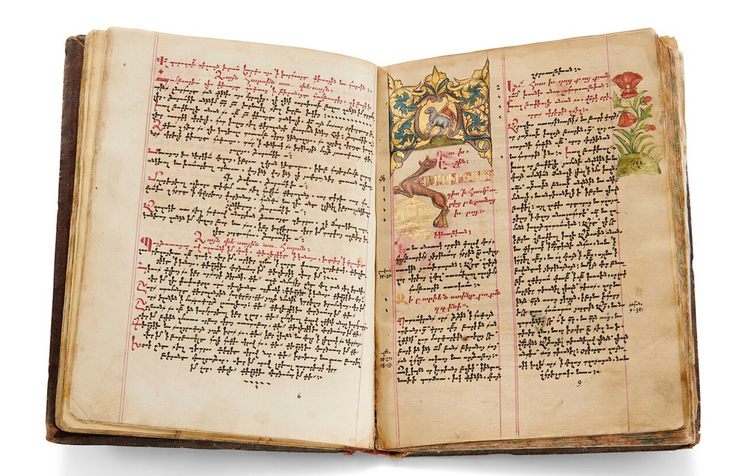
The story of Apollos in Acts is just a fragment, but even fragments can change how we see the past. We glimpse an eloquent preacher, passionate for God, yet missing key pieces of the story until Prisca and Aquila step in. It’s a reminder that what we know of the early Jesus movement is partial, stitched together from scattered voices.
That should make us humble. If Prisca, Aquila, and Apollos were able to listen, correct, and braid together their different strands, then we can too. Through their behavior, they’re giving us a lesson in agápē love.
We know so little of the world from which our faith emerged — and yet, even with so little, paths can be changed. Communities can strengthen. Hope can ignite.
What draws me most is this: Apollos’ story reminds me that following the way of compassion in our daily lives matters more than defending any single text, book, or canon. Faith is not about perfect knowledge but about openness, listening, and the courage to weave together a more life-giving Way.
This is our work: not winning arguments, but weaving threads of life and faith together.
Quick FAQs
Was John the Baptist more influential than Jesus at first?
Josephus suggests yes: John’s death was seen as a national catastrophe, while Jesus barely registers in non-Christian sources of the era. Some scholars even argue that without Paul’s missionary fire and theological reframing, Jesus’ movement might have gone the same way as John’s — remembered as a passionate revival, but ultimately a minor offshoot that never broke out of obscurity.
Who was Apollos in Acts?
A Jewish teacher from Alexandria, passionate about Jesus but trained only in John’s baptism — a living example of overlapping loyalties in the first century. Modern Christians generally don’t realize the level of debate over types of baptism available in the first century, and what they represent.
Why did early Christians call themselves “The Way”?
It wasn’t unique to them. Other sects, including Qumran, also used “the Way” to describe their path of devotion and purity. Modern Christians generally don’t realize how widespread this moniker was across various Jewish reform groups.
Please let me know in the comments if you’d like to learn more about any of these FAQs!
Questions for You
- What parallels do you see between Apollos’ fractured world and our own?
- Is fragmentation dangerous, creative, or both?
- Does learning about the scattered religious landscape of the 1st century change your mind about how you read Biblical texts?
- Which voices today are worth weaving into the future of faith?
This was first published on Absinthe & Transcendentalists.