How Yahweh Became God: From Canaanite Deity to World Religion
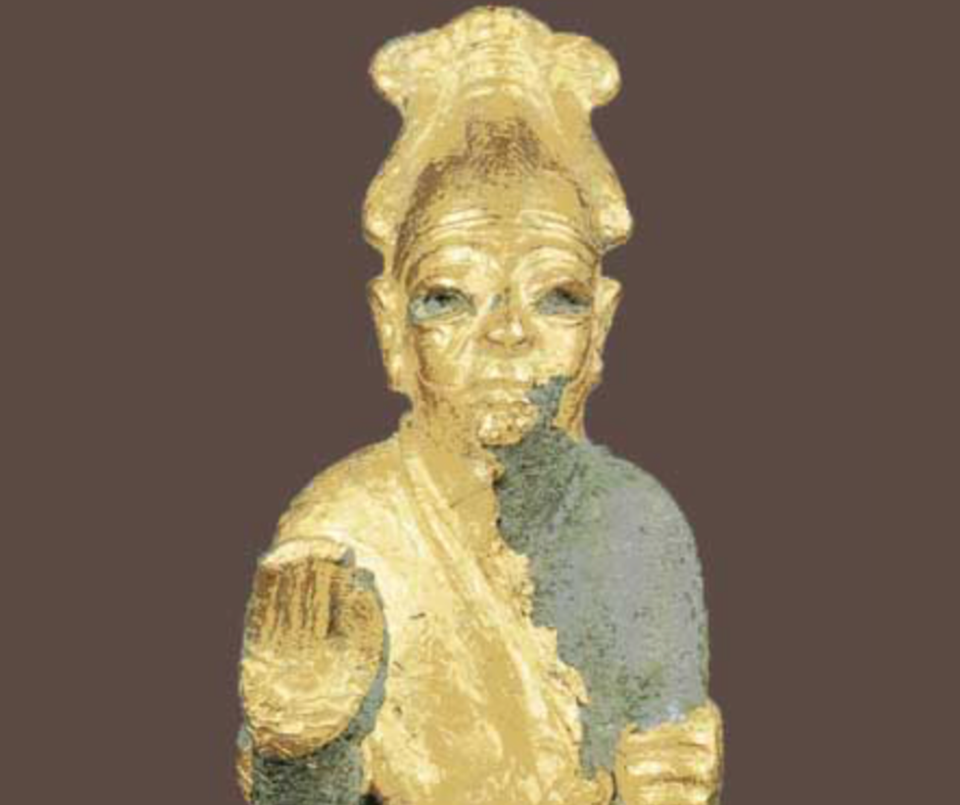
Tracing Yahweh’s journey from ancient Canaanite god to global divinity—and what it means for modern seekers
Many people sense that the God they were taught no longer fits the depth of their spiritual experience.
This essay explores how Yahweh evolved—from a local Canaanite deity into the God of Judaism, Christianity, and Islam—and why understanding that journey can open new, more honest ways of relating to the divine today.
Before Yahweh was known as the sole creator of the cosmos, he was a local god — one among many.
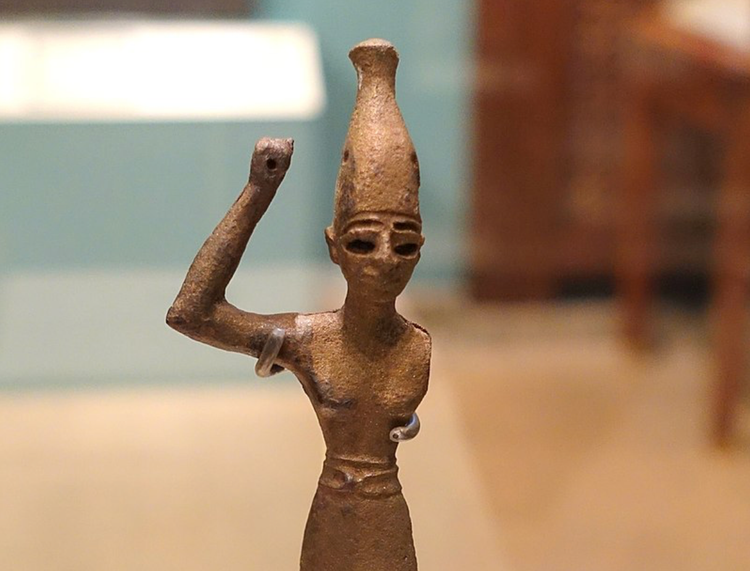
Likely born in the hills of Edom or Seir, southeast of Canaan, Yahweh began not as the one true God but as one among many in a complex pantheon worshiped by early Israelites—alongside El, Baal, and Asherah.
El, the ancient high god of the Canaanites, was once the chief deity. The very name Israel likely means “he struggles with El,” and an astonishing number of biblical names—Daniel, Elijah, Bethel—begin or end with El.
These aren’t accidents; they are artifacts of a time when El was central, and Yahweh was still subordinate, still a junior god finding his place.
So Where Did Yahweh Come From?
Somewhere between the 8th and 6th centuries BCE—something remarkable happened. Over centuries of war, exile, theological crisis, and priestly reform, Yahweh did what few deities have done: He absorbed or outlasted his rivals and became the only god standing.
This is the story of how a tribal deity became the One God of Jews, Christians, and Muslims—faiths that now represent more than half the global population.
Early Israelite Religion: Polytheism with a Favored God
The Israelites began, like their neighbors, as polytheists. While Yahweh may have been favored, the biblical record makes clear that the people routinely worshiped Baal, Asherah, and other gods.
The Hebrew Bible reflects this tension—not as a straightforward story of covenant and betrayal, but as a record of religious diversity gradually being rewritten into unity.
Kings like Hezekiah and Josiah attempted to consolidate power and purify the faith by tearing down altars, smashing sacred pillars, and centralizing worship in Jerusalem.
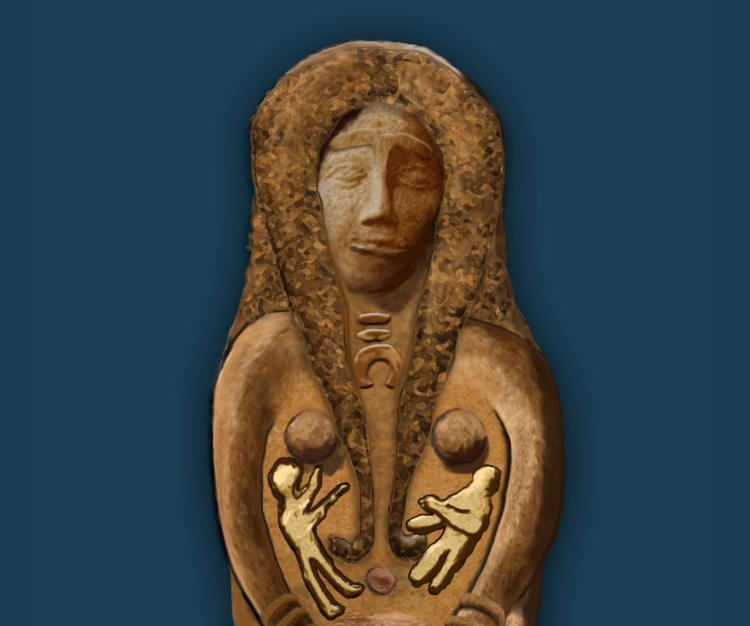
These reforms weren’t just about idols—they were attempts to eliminate Asherah, Yahweh’s consort in many early traditions, a goddess associated with motherhood, love, and fertility.
What the early Hebrew writers portray as purifying their society, modern scholars often view as centralizing power and erasing the sacred feminine.
When we look again at these texts, we see political moves that empowered the Temple priesthood and reduced local religious authority at the community level.
The Babylonian Exile and the Birth of Monotheism
Then came catastrophe. In 586 BCE, Jerusalem was destroyed by the Babylonians. The Temple was razed, and the priestly elite—including the Yahwists—were exiled to Babylon.
This presented a theological crisis: How could the One True God allow his own house to be destroyed? Why had Yahweh failed to protect his people?
The answer the exiled priests gave was revolutionary: Yahweh had not failed. He had caused the destruction. The Babylonians had not defeated him—he had used them as instruments of divine punishment. There were no other gods. Yahweh was not just Israel's god. He was the god of Babylon, too. He was the only god.
The Birth of Monotheism
This moment—what some scholars call the birth of true monotheism—changed everything. Isaiah 44:6 declares: "I am the first and I am the last; besides me there is no god."
This bold theological claim emerges from the period of exile, when the Yahwist priests reframed the Babylonian destruction of Jerusalem not as Yahweh's defeat but as his divine judgment on Israel, as described in the later chapters of Isaiah (Isaiah 40–55).
Rather than acknowledging the power of Babylonian gods like Marduk, the Yahwists claimed Yahweh had used Babylon as a tool of his will—a perspective thoroughly examined by Mark S. Smith in The Early History of God, and by Thomas Römer in The Invention of God.
N.B.: We saw a similarly audacious transformation in early Christianity, where the apparent defeat of their messiah was reimagined as a divine necessity—central to salvation and the very axis of human history.
When Persia's King Cyrus conquered Babylon and allowed the Jews to return home, Yahweh’s followers credited him as Yahweh’s anointed one—God’s instrument (Isaiah 45:1).
In his The Time of the Establishment of Biblical Monotheism, Christos G. Karagiannis shows how this re-interpretation aligned with a growing theological consensus: Yahweh was not only Israel’s god but the sovereign over all nations, and foreign kings acted unknowingly under his authority.
History was rewritten through a Yahwist lens: all kings served Yahweh, whether they knew it or not.
It’s worth noting, however, that Yahwistic monotheism was not the first of its kind. Centuries earlier, in 14th-century BCE Egypt, Pharaoh Akhenaten radically reoriented Egyptian religion around a single deity—the Aten, the sun disk—abandoning the traditional pantheon.
Around the same general period, Zoroastrianism also emerged in Persia, presenting a strikingly ethical monotheism centered on Ahura Mazda. (Perhaps we’ll explore these parallels more fully in a future piece.)
N.B.: This ancient figure—Cyrus the Great—has become a unexpectedly powerful modern symbol. In American charismatic Christian movements like the New Apostolic Reformation, Cyrus is invoked as a parallel to Donald Trump: a secular, even impious man chosen by God to serve divine purposes. As Cyrus enabled the return of the exiles, they believe Trump has been chosen to restore Christianity to cultural dominance.
Christianity and Empire
Fast-forward a few centuries, and Christianity—emerging from Jewish Yahwism—takes this theology global. By the time of Constantine, Yahweh had become the God of the Roman Empire.
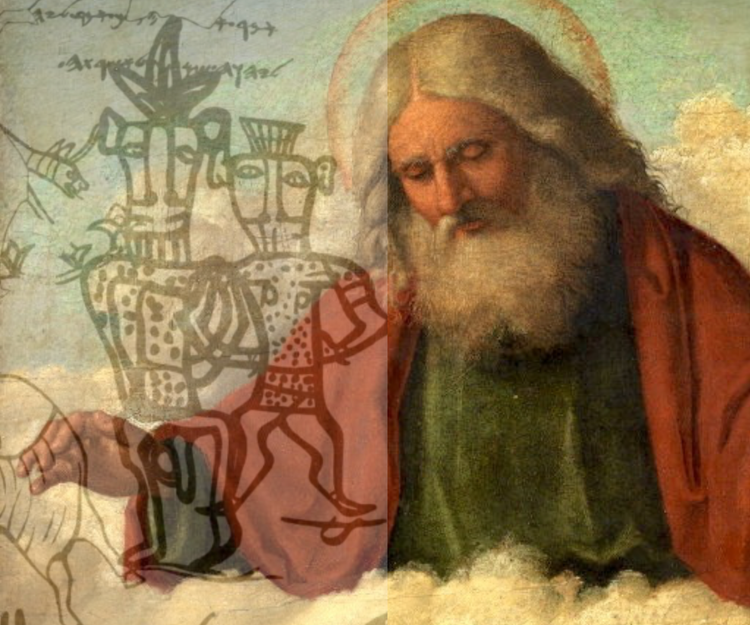
His origins as a storm or war god were mostly forgotten, overwritten by theologies of love, judgment, and incarnation. Yahweh, now called simply "God," had moved from a mountain shrine to the throne of heaven.
But even within Christianity, the understanding of this God has evolved dramatically over the centuries—from the wrathful ruler of early church theology, to the medieval scholastic God of unmoved perfection, to the personal redeemer of evangelical devotion, to modern reinterpretations that emphasize inclusivity, cosmic love, or even process theology.
What Christians mean by "God" has never been fixed—and continues to shift with cultural, philosophical, and spiritual change.
Why Modern Judaism Is Not Ancient Yahwism
It’s crucial to note that modern Judaism is not Yahwism in its original form. Judaism evolved beyond the ancient obsession with centralizing power in a single deity.
Many Jews today hold views of God that are mystical, ethical, philosophical—even panentheistic. The Pew Research Center’s 2020 study, "Jewish Americans in 2020," shows a wide diversity of belief: while many Jews describe themselves as believing in God or a higher power, few interpret this belief in rigidly traditional terms.
Instead, understandings of God include impersonal force, moral principle, or divine mystery.
Rabbi Bradley Shavit Artson, for instance, advocates for a panentheistic, process-theological view of God—one who suffers with us and grows alongside creation.
Jewish Renewal movements, like those associated with Rabbi Zalman Schachter-Shalomi, embrace a highly mystical and relational view of the Divine.
Meanwhile, Kabbalistic traditions see God as a complex, multilayered being whose attributes are emanations of a deeper, unknowable source.
Some speak of God as the Ground of Being. Others see divinity in relationality, in Torah, in community.
The rigid, jealous Yahweh of Deuteronomy is not the God many Jews pray to today.
So when modern Christians attempt to impose ancient Yahwist laws on contemporary society, or read Old Testament (Hebrew scripture) mandates as timeless truths, they are often invoking a version of God that Judaism has outgrown.
Yahweh’s Unexpected Return
Strangely enough, Yahweh is making a quiet return—but not through fundamentalism.
In some corners of NeoPaganism, individuals (often raised Jewish) are reclaiming Yahweh as one god among many Canaanite deities. They honor Asherah again. They invoke Baal without shame. For them, this is not apostasy but healing, reconnection, and remembrance.
For some, what was once heresy has become a homecoming. In fact, this movement has been developing for decades. According to Wikipedia and other sources, various Jewish neopagan groups have emerged in the U.S. and Israel since the 1970s, some explicitly incorporating Yahweh alongside Canaanite deities.
Groups like the Kohenet Hebrew Priestess Institute and rabbis like Jill Hammer have reclaimed aspects of Israelite goddess traditions.
In some circles, terms like 'Jewitchery' or 'Semitic neopaganism' reflect a creative blend of ancestral roots and contemporary spirituality.
What This Means for Us
Understanding Yahweh’s journey—from Edomite tribal god to ruler of heaven and earth—is not about discrediting faith, but contextualizing it.
It’s about remembering that our human understanding of God, like everything else, has an evolutionary history.
When we know where our ideas come from, we can hold them more wisely. We can choose what to carry forward and what to lay down.
Yahweh’s story continues to grow—not only in “Religions of the Book,” but also in Pagan revivals, in scholarship, and in world culture.
Perhaps the question now is not who God was, but who God is becoming.
Or more precisely: how do we now understand our Source?
If you’re drawn to the ancient, the mystical, and the forgotten roots of faith—and you’re interested in exploring them with honesty and care—you may want to subscribe.
I write for readers who believe spiritual depth grows when we know where our ideas come from.
This essay was originally published here.
For more, check out other pieces in this series: